
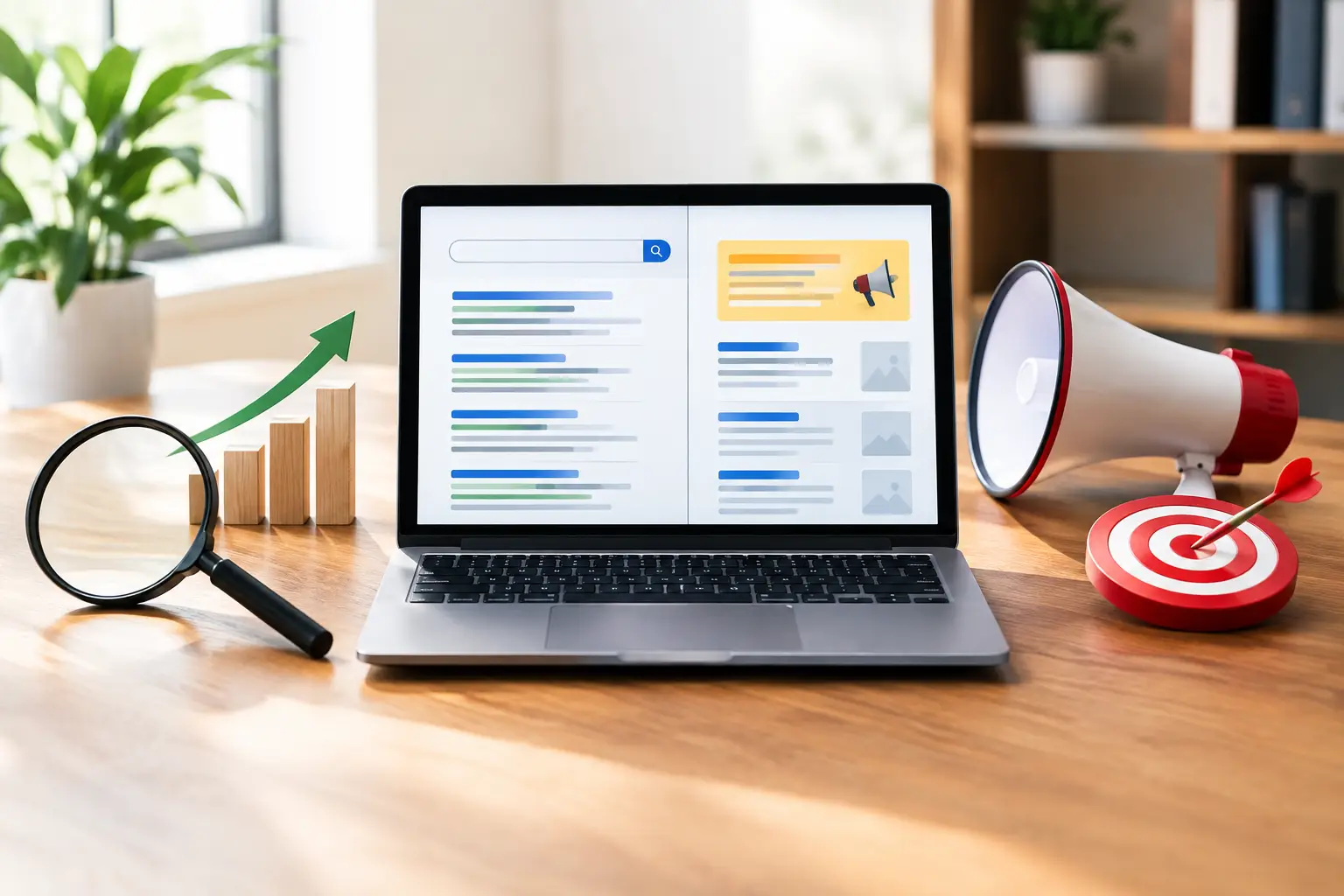
A contractor can launch an ad campaign this morning and receive calls by afternoon. That same contractor may also have a website buried beneath competitors in Google, with no service pages, recent reviews, or helpful local content to support long-term growth. That is the real business decision behind SEO versus paid advertising: do you need attention now, want to build an asset for later, or need a plan that does both without wasting budget?
For most small and mid-sized businesses, this is not an either-or choice. SEO and paid advertising solve different problems. The right mix depends on your sales cycle, competition, margins, website quality, and how quickly you need leads.
SEO Versus Paid Advertising: The Core Difference
Search engine optimization, or SEO, improves your ability to appear in unpaid search results. It involves the work that helps Google and other search platforms understand what your business does, where you serve customers, and why your company is credible. That can include better service pages, local SEO, Google Business Profile optimization, reviews, technical website improvements, articles, videos, and clear answers to common customer questions.
Paid advertising places your business in front of people through platforms such as Google Ads, social media ads, display ads, or sponsored listings. You choose an audience, location, budget, and message. When the campaign is active, you can generate visibility quickly. When you stop funding it, that visibility usually stops as well.
Think of paid ads as rented attention. Think of SEO as building a property you own. Both can produce leads, but they behave very differently over time.
A paid campaign can be especially useful when a business has a time-sensitive offer, a new service, a seasonal demand window, or a need to test which messages convert. SEO is typically better suited to building dependable visibility for the searches customers make every day, such as “emergency plumber near me,” “business attorney in [city],” or “best physical therapy clinic near me.”
When Paid Advertising Makes Business Sense
Paid advertising is often the fastest path to measurable traffic. For a company with a well-built landing page, a clear offer, and someone available to respond to leads, it can quickly reveal what people are searching for and what they are willing to act on.
It is particularly effective when search demand already exists. A homeowner looking for same-day HVAC repair is not researching for weeks. They are looking for a provider now. A targeted search ad can put your business in front of that customer at a critical moment.
Paid ads also give business owners more control. You can target specific cities, service areas, devices, audience groups, or times of day. You can pause poor-performing campaigns, test new headlines, and adjust spending based on results. That flexibility is valuable when you are launching a new location, filling a short-term gap in sales, or promoting a high-margin service.
However, paid advertising is not automatic profit. A campaign can burn through budget if the targeting is too broad, the keywords are poorly selected, or the landing page does not give visitors a reason to call, book, or request an estimate. Clicks are not customers.
The cost also rises in competitive industries. Legal, home services, healthcare, real estate, financial services, and many B2B categories can have expensive clicks. If one lead costs more than your business can profitably support, more ad spend is not the answer. Better conversion strategy, a sharper offer, or stronger organic visibility may be the better investment.
Where SEO Creates Long-Term Value
SEO takes longer because trust takes longer. Search engines need to crawl your website, understand your content, assess its relevance, and see signals that your business is legitimate and useful. In local search, consistent business information, customer reviews, proximity, website quality, and local relevance all influence visibility.
The payoff is that a strong organic presence can continue attracting qualified visitors without a direct charge for every click. A useful service page or local resource can generate leads month after month. A well-managed Google Business Profile can produce calls, direction requests, and website visits from people already looking for your category.
SEO also supports credibility before a prospect contacts you. Many customers do not click the first ad they see. They compare websites, read reviews, look at photos, scan service pages, and search for proof that a company understands their needs. A business that appears consistently in organic results often feels more established than one that only appears in sponsored placements.
This matters even more as customers use AI-powered search tools and search result features to ask detailed questions. Clear website content, accurate business information, strong reviews, and demonstrated expertise make it easier for search engines and AI platforms to identify your company as a relevant answer. No business can guarantee placement in an AI-generated response, but a thin website with vague pages gives these platforms very little to work with.
SEO has trade-offs. It is not a quick fix for a weak site, and it cannot compensate for poor customer service or a business model that does not meet market demand. Results can take months, especially in crowded markets. Business owners should also be cautious of anyone promising first-place rankings on a specific timeline. Search results change, competitors invest, and no ethical provider controls Google.
The Hidden Issue: Your Website Must Convert
The SEO versus paid advertising debate often misses the biggest source of lost revenue: a website that receives visitors but fails to create confidence or make the next step easy.
If an ad sends a prospect to a generic homepage, they may leave before learning whether you serve their area, handle their problem, or offer the service they need. If organic search brings someone to a page with outdated information, weak proof, or no clear contact option, that traffic is just as likely to disappear.
Before increasing either SEO or ad spend, review the customer journey. Your website should clearly explain who you help, what services you provide, where you work, and why customers should choose you. It should feature visible calls to action, easy mobile navigation, current reviews or case examples where appropriate, and direct contact options.
For local businesses, each major service should usually have its own focused page. A roofing company should not expect one broad “services” page to compete for roof repair, roof replacement, storm damage, and commercial roofing searches. Specific pages provide better information for customers and clearer relevance for search engines.
How to Choose the Right Investment Mix
Start with the question that matters most: what must happen for marketing to be profitable? If your business needs leads this month and has a proven sales process, paid search can create useful momentum. If you depend on recurring local demand and want to reduce reliance on paid clicks over time, SEO deserves sustained investment.
A balanced plan is often practical. Use paid advertising to capture high-intent searches and learn which services generate profitable leads. At the same time, invest in the website, local profile, reviews, and content needed to build organic authority. The advertising data can also improve SEO by showing which customer language, locations, and services deserve greater attention on the site.
Budget should follow economics, not assumptions. Track phone calls, form submissions, booked appointments, qualified opportunities, and closed revenue. A campaign with fewer leads may be more valuable if those leads consistently become profitable customers. Likewise, an SEO effort should be measured by meaningful visibility and business results, not only rankings for vanity keywords.
A Smarter Starting Point for Small Businesses
If your website is outdated or unclear, start there. A polished logo alone will not generate leads, and neither will a large ad budget sent to a confusing site. Build a credible online foundation first: accurate business information, clear service pages, strong local signals, customer proof, and a conversion path that works on mobile.
Then choose the channel that addresses your immediate constraint. Need qualified demand quickly? Test a tightly targeted paid campaign. Need to stop disappearing when customers research your services? Commit to SEO and local visibility. Need both? Set realistic budgets for each, measure outcomes, and improve what the data shows.
The strongest marketing does not chase clicks for their own sake. It helps the right people find your business, trust what they see, and feel confident enough to choose you.