
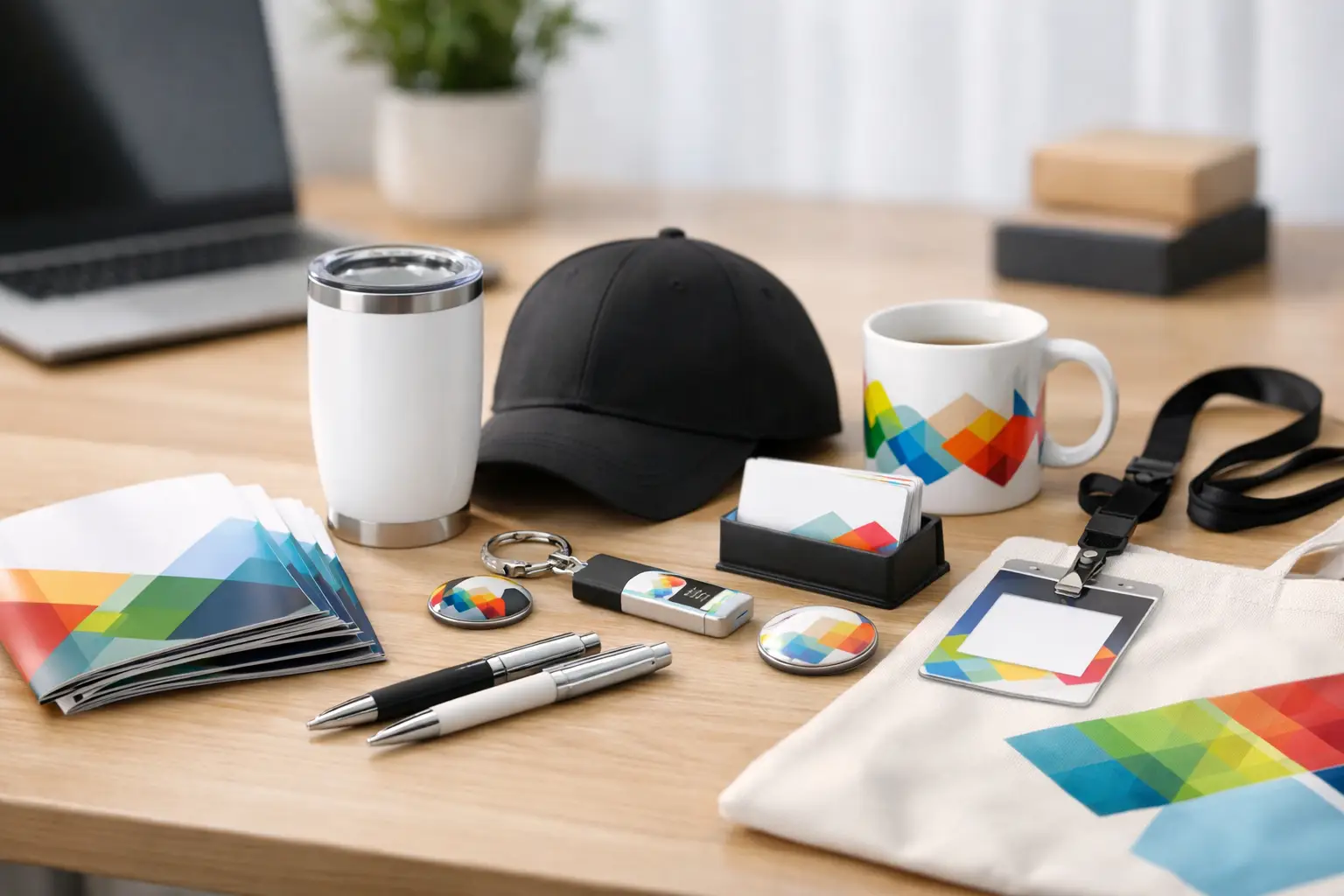
A rushed flyer, an outdated brochure, and a business card that does not match your website can quietly chip away at trust. That is why custom promotional materials design matters more than many small business owners realize. These pieces are not just handouts. They are often the first proof that your business is organized, credible, and worth contacting.
For small businesses, promotional materials need to do a very specific job. They have to represent your brand clearly, support sales conversations, and fit real budget limits. If a design looks polished but does not help a customer understand what you offer, it misses the point. If it says the right things but looks generic, it can make your business easy to forget.
What custom promotional materials design actually means
Custom promotional materials design is the process of creating branded marketing pieces that are built for your business, your audience, and your goals. That can include business cards, flyers, brochures, postcards, signage, banners, presentation folders, rack cards, mailers, and trade show materials. In some cases, it also extends to digital promotional assets that need to match printed pieces.
The key word is custom. A templated design can be fine for a temporary need, but custom work is built around your message, your visual identity, and the actions you want customers to take. It considers the way your audience makes decisions, what information they need first, and how the material will actually be used.
That last part is where many businesses lose momentum. A brochure handed out at a local networking event should not be designed the same way as a leave-behind packet for a service estimate. A postcard for a neighborhood mailing has different demands than a banner used at a vendor booth. Good design starts by understanding the use case, not by choosing colors and fonts.
Why small businesses benefit most from better promotional design
Large companies can absorb inconsistency. Small businesses usually cannot. When you are building recognition in a local market or trying to earn trust in a crowded niche, every customer touchpoint carries more weight.
A well-designed promotional piece helps your business look established, even if you are still growing. It gives people a clearer sense of who you are and what you do. It also saves time for you and your team because the material can answer common questions, reinforce your message, and support follow-up after a meeting or event.
There is also a practical sales benefit. Custom promotional materials design can make your offer easier to understand. That matters when customers are comparing several providers quickly. Clean layout, focused messaging, and a strong call to action reduce friction. Instead of asking prospects to figure out your value on their own, the material does some of that work for you.
Still, there is a trade-off. Not every business needs an entire suite of printed collateral at once. If your customers primarily find and evaluate you online, a full brochure package may not be the first priority. On the other hand, if you rely on referrals, in-person meetings, events, or local outreach, promotional materials can have a direct impact on conversion.
The difference between attractive design and effective design
Many business owners have seen promotional pieces that look impressive but say very little. Effective design does more than appear polished. It organizes information in a way that helps people act.
That starts with message hierarchy. The most important information should be obvious within seconds. Who you help, what you offer, and what the next step is should not be buried in dense copy or pushed into small print. If a flyer has five competing headlines or a brochure tries to explain every service in equal detail, readers often retain nothing.
Effective design also respects how people actually scan materials. They look at headlines first, then visuals, then short supporting copy. If interest builds, they keep reading. This is why spacing, typography, and layout matter so much. They are not decorative decisions. They control whether your message gets absorbed or ignored.
Brand consistency matters too, but not in a rigid way. Your promotional materials should align with your website, logo, and other marketing pieces so customers recognize the business immediately. At the same time, each piece should be designed for its job. A postcard may need a stronger headline and less detail. A brochure may need more structure and service explanation. Consistent does not mean identical.
How to approach custom promotional materials design strategically
The smartest approach is to start with the business need, not the format. Ask what problem the material needs to solve. Are you trying to get more calls from a direct mail campaign? Do you need a leave-behind that supports sales meetings? Are you preparing for a community event and need materials that can attract attention fast?
Once that goal is clear, content becomes easier to shape. A promotional piece should not try to be everything at once. It needs one main purpose. That purpose informs the copy, visual emphasis, size, and printing choices.
Audience should shape the design just as much as branding does. A home service company speaking to busy homeowners will need a different tone and information structure than a startup pitching B2B partners. Price-conscious local customers may respond to clarity, credibility, and convenience. Higher-ticket buyers may need more reassurance, process detail, or proof points.
This is also where small businesses can avoid wasted spend. It is common to invest in design first and realize later that the message is weak or the format was wrong. A practical design process builds from strategy to copy to layout to production. That keeps the material useful instead of just visually acceptable.
Common mistakes that weaken promotional materials
One of the most common problems is trying to include too much. Small business owners often feel pressure to explain everything because every service matters. But crowded materials usually make the business look less focused, not more capable.
Another issue is generic branding. Stock visuals, vague phrases, and copied marketing language can make your business blend in with competitors. If your materials could belong to almost anyone in your industry, they are not doing enough to support differentiation.
Production choices can also work against the design. Poor print quality, weak paper stock, hard-to-read sizing, or colors that reproduce badly can undercut a strong concept. That does not mean every piece needs premium finishes. It means the final product should fit the purpose. A business card used for high-value networking may deserve a stronger stock than a short-term event flyer.
Then there is inconsistency. Businesses often order materials in phases, which is normal, but when each piece is designed separately without a unifying system, the result feels fragmented. Different fonts, mismatched colors, shifting logo placement, and conflicting messaging create confusion over time.
What to prioritize if your budget is limited
Most small businesses do not need every promotional piece at once. If budget is tight, prioritize the materials that support your most common customer interactions.
For some businesses, that starts with business cards, a flyer, and a simple brochure or service sheet. For others, it might be signage, postcards, or event materials. The right mix depends on how you attract leads and where your team spends time.
It often makes sense to build a coordinated foundation first. That means choosing a clear visual system, refining the core message, and creating a few high-use assets that can be expanded later. This approach is more efficient than ordering one-off designs every few months and trying to force consistency afterward.
A practical design partner can help you make those choices without overbuilding. That is especially important for small businesses that need strong presentation but cannot afford delays, revisions that go nowhere, or materials that look good and perform weakly.
When professional support makes the biggest difference
If your business is preparing for a launch, rebrand, local event, sales push, or expansion into a new market, this is usually the right time to invest in custom promotional materials design. Those moments put your brand in front of more people, and inconsistency becomes more visible.
Professional support also matters when your current materials no longer reflect the quality of your work. Many small businesses outgrow their early DIY assets. What helped you get started may not help you compete now.
A good design partner should make the process simpler, not more complicated. They should help you clarify the message, recommend the right formats, and create materials that are both polished and usable. That is where a small-business-focused firm like AKR Marketing Designs can add real value - not by overwhelming you with options, but by building practical pieces that support visibility and growth.
Strong promotional design is not about having more materials. It is about having the right ones, built to represent your business clearly when it counts most.