
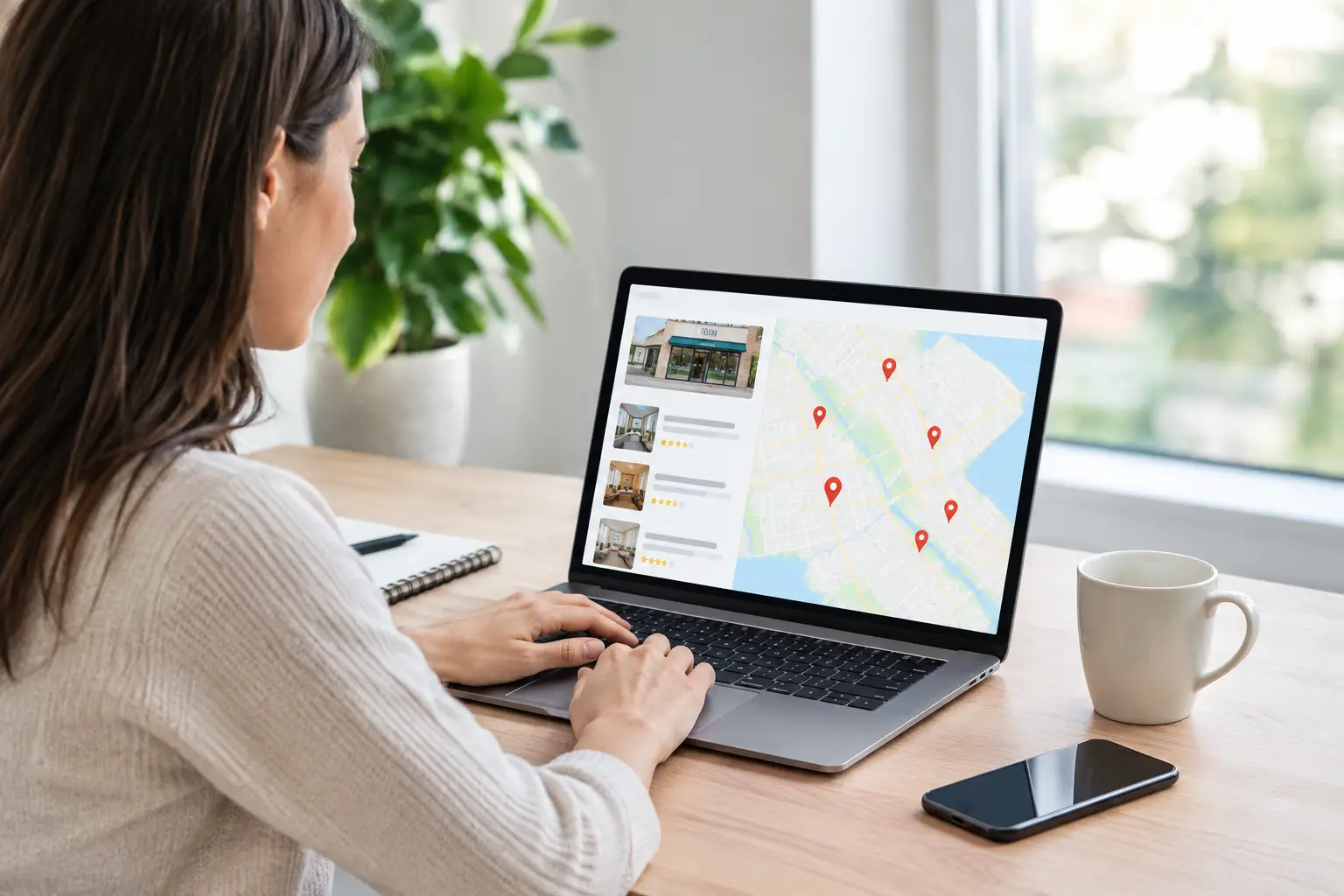
A homeowner searches for an emergency plumber in their neighborhood at 8 p.m. A business owner looks for a commercial cleaning company near their office. In both cases, a generic homepage may not give them enough confidence to call. When you build local landing pages with useful details, clear services, and real local proof, you give nearby prospects a direct path from search to contact.
For small and mid-sized businesses, local landing pages are not just an SEO exercise. They are sales pages for the markets you serve. A good page helps Google understand where and how you work, but it also helps a potential customer decide that your business is credible, available, and relevant to their specific need.
What a Local Landing Page Should Do
A local landing page focuses on a specific service area, city, neighborhood, or group of nearby communities. It should answer a simple question: why should someone in this location choose your business?
That does not mean every page needs a new version of the same sales copy with a city name inserted 20 times. Search engines and customers can both recognize thin, repetitive pages. More importantly, that approach does nothing to build trust.
A useful local page should make the connection between your service and the customer’s location clear. A roofing contractor may explain the types of homes and weather conditions common in the area. A law firm may address the counties it serves and the process clients can expect. A medical practice may highlight appointment availability, insurance considerations, or proximity to recognizable local areas.
The page should also give visitors an easy next step. If a person searches on a phone, they should not have to hunt for your phone number, service details, or appointment form. Local visibility matters, but visibility without conversion is an expensive missed opportunity.
Choose the Locations That Can Produce Business
The strongest local landing page strategy begins with business priorities, not an oversized map. Start with the cities, neighborhoods, or service zones that can realistically generate qualified work. Consider where your current customers come from, where your team can serve profitably, and where there is enough demand to justify a dedicated page.
A service business with one office does not need a separate page for every town within 50 miles. If the business can deliver excellent service in five nearby communities, begin there. Build depth before scale.
It also helps to identify the service-location combinations with the highest value. A remodeling company may want pages for kitchen remodeling in its strongest markets rather than broad pages for every possible home service. A consultant with a national practice may need location pages only where there is a true office, established client base, or specialized local offering.
This decision protects your budget and keeps the website focused. More pages are not automatically better. The right pages are the ones that support real revenue opportunities.
Match the Page to Search Intent
Someone searching for "electrician in Plano" usually wants to know whether the company serves Plano, handles their problem, and can respond quickly. Someone searching for "commercial electrician Plano" has an even more specific need. The page should reflect that intent.
A general service-area page can work well when customers simply need confirmation that you serve their city. A dedicated service-and-city page is more appropriate when a particular service has meaningful search demand, strong profit potential, or different customer questions.
Avoid creating pages for locations where you have no practical connection. Do not claim an office address that does not exist, and do not imply that you are locally based when you only travel there occasionally. Clear, accurate service-area language earns more trust than inflated claims.
Build Local Landing Pages Around Evidence
Every page needs original value. The location itself should shape the information on the page, not just the headline.
Start with a direct opening that names the service, the location, and the customer problem you solve. Then expand on what makes your business a fit for customers there. This may include local project experience, common property types, service logistics, licensing, response times, or specialized expertise.
A dependable local page usually includes these six elements:
- A clear headline that identifies the service and area served.
- A concise explanation of the customer problems you solve.
- Location-specific details that are accurate and meaningful.
- Proof such as testimonials, project examples, credentials, or years of experience.
- A simple call to action, including a visible phone number or inquiry form.
- Practical FAQs that address service coverage, timing, pricing expectations, or next steps.
The proof section often makes the biggest difference. A customer may see similar claims on five competitor websites. They are more likely to remember a business that shows real results, explains its process plainly, and includes a review from someone with a comparable need.
If you have completed projects in the area, reference them carefully without compromising customer privacy. For example, a contractor could describe work completed for homes built in a particular era or common construction style. A business-to-business provider could explain experience with local property managers, manufacturers, or professional offices.
Keep Business Information Consistent
Your business name, address, phone number, hours, and service areas should be consistent across your website, Google Business Profile, social profiles, and major business listings. Small discrepancies can confuse customers and weaken confidence in your local presence.
Consistency also helps search engines and AI-driven search tools connect your business to the right place and service. Use plain language. State what you do, where you do it, and who you help. The clearer those facts are across your digital presence, the easier it is for customers and technology platforms to interpret them correctly.
Do Not Create Thin City Pages
The common failure is the copy-and-paste city page. It has the same paragraphs, same images, same testimonials, and same call to action as every other page. Only the location name changes.
This strategy may create a large page count, but it rarely creates a stronger brand. It can also make your website harder to manage and leave visitors with the impression that your business is distant or generic.
Instead, create fewer pages with stronger local substance. Add a unique introduction, locally relevant FAQs, appropriate images, and proof that supports the market you are targeting. If you cannot add useful detail to a page yet, it may be better to include that location on a broader service-area page until you have enough material to build a credible dedicated page.
There is a trade-off here. A company expanding rapidly may need basic coverage pages before it has deep market-specific content. That can be reasonable if the information is honest and helpful. Treat those pages as a starting point, then improve them as you gain projects, reviews, photos, and customer insight from each market.
Design for Calls, Forms, and Appointments
A local page should not make visitors scroll through a long company history before they can contact you. Put the primary action near the top of the page. For many local businesses, that means a click-to-call phone number, a short request form, or an appointment button.
Keep forms focused on the details your team truly needs to respond. Asking for a name, phone number, service needed, and location is often enough for an initial inquiry. A long form may help with qualification, but it can also reduce submissions, especially on mobile devices.
Trust signals should appear close to the action. Reviews, professional credentials, insurance information, years in business, and service guarantees can reduce hesitation at the moment a customer is deciding whether to reach out.
Mobile usability deserves special attention. Many local searches happen when someone needs an answer quickly. Buttons should be easy to tap, text should be readable, and page speed should not frustrate a visitor before they see your offer.
Measure Whether the Pages Are Earning Their Place
Publishing a page is the beginning, not the finish line. Track whether local landing pages generate calls, form submissions, booked appointments, and qualified leads. Rankings are useful, but they are not the only measure of success.
Review which locations bring traffic and which actually bring business. If a page receives visits but few inquiries, the offer may be unclear, the page may not match the search intent, or the conversion path may have too much friction. If a page produces leads that are outside your service area or budget, tighten the messaging and qualification questions.
Update pages as your business grows. Add fresh reviews, recent project photos, expanded FAQs, and new service details. A well-maintained page signals that your business is active, accountable, and prepared to serve the market it claims.
The best local landing pages make a customer feel that they have found the right business before they ever make the call. Build each page around that standard, and your website becomes more than a digital brochure. It becomes a practical tool for getting found, getting trusted, and getting chosen.