A lot of small business owners ask for a logo when the real issue is bigger. They are not getting enough leads, their marketing looks inconsistent, or customers do not quite remember them after the first interaction. That is where branding vs logo design becomes more than a design question. It becomes a business decision.
If you are running a small company, the difference matters because a logo alone will not fix unclear messaging, weak positioning, or scattered visuals. At the same time, branding without a strong visual identity can feel incomplete. The goal is not to choose one over the other. The goal is to understand what each one does so your business gets the right support.
Branding vs logo design: what is the actual difference?
Logo design is one piece of your brand. Branding is the larger system that shapes how people recognize, understand, and remember your business.
Think of your logo as an identifier. It is the mark people see on your website, business card, signage, packaging, or social graphics. A good logo helps your business look professional and consistent. It creates recognition, but it does not explain everything your business stands for.
Branding goes further. It includes your visual identity, but also your messaging, tone, positioning, customer experience, and the overall impression your business leaves. Your brand is what tells people whether you are premium or budget-friendly, modern or traditional, bold or approachable. It shapes what customers expect before they ever call, click, or walk through the door.
That is why two companies can have polished logos and still perform very differently. One may feel clear, credible, and memorable. The other may still come across as generic because the larger brand is not defined.
What logo design does well
A logo has a specific job. It gives your business a visual signature that customers can quickly recognize. For a small business, that matters more than people think. If your materials look homemade, outdated, or inconsistent, customers may question your professionalism before they ever evaluate your service.
Good logo design helps you appear established. It creates a foundation for your website, social profiles, printed materials, uniforms, vehicle graphics, and more. It also gives you something repeatable, which is critical when your business starts showing up in more places.
But a logo is not a shortcut to a complete brand. It will not define your voice, sharpen your offer, or explain why a customer should choose you over a competitor. A logo can support trust, but it cannot carry the entire weight of your marketing.
That is often where frustration starts. A business owner invests in a logo, uses it everywhere, and still feels like the company lacks direction. Usually, that is not because the logo failed. It is because the business needed broader brand clarity.
What branding covers that a logo cannot
Branding answers the questions behind the design. Who are you trying to reach? What do you want to be known for? What makes your business different in a crowded market? How should your brand sound when someone reads your website or sees a social post?
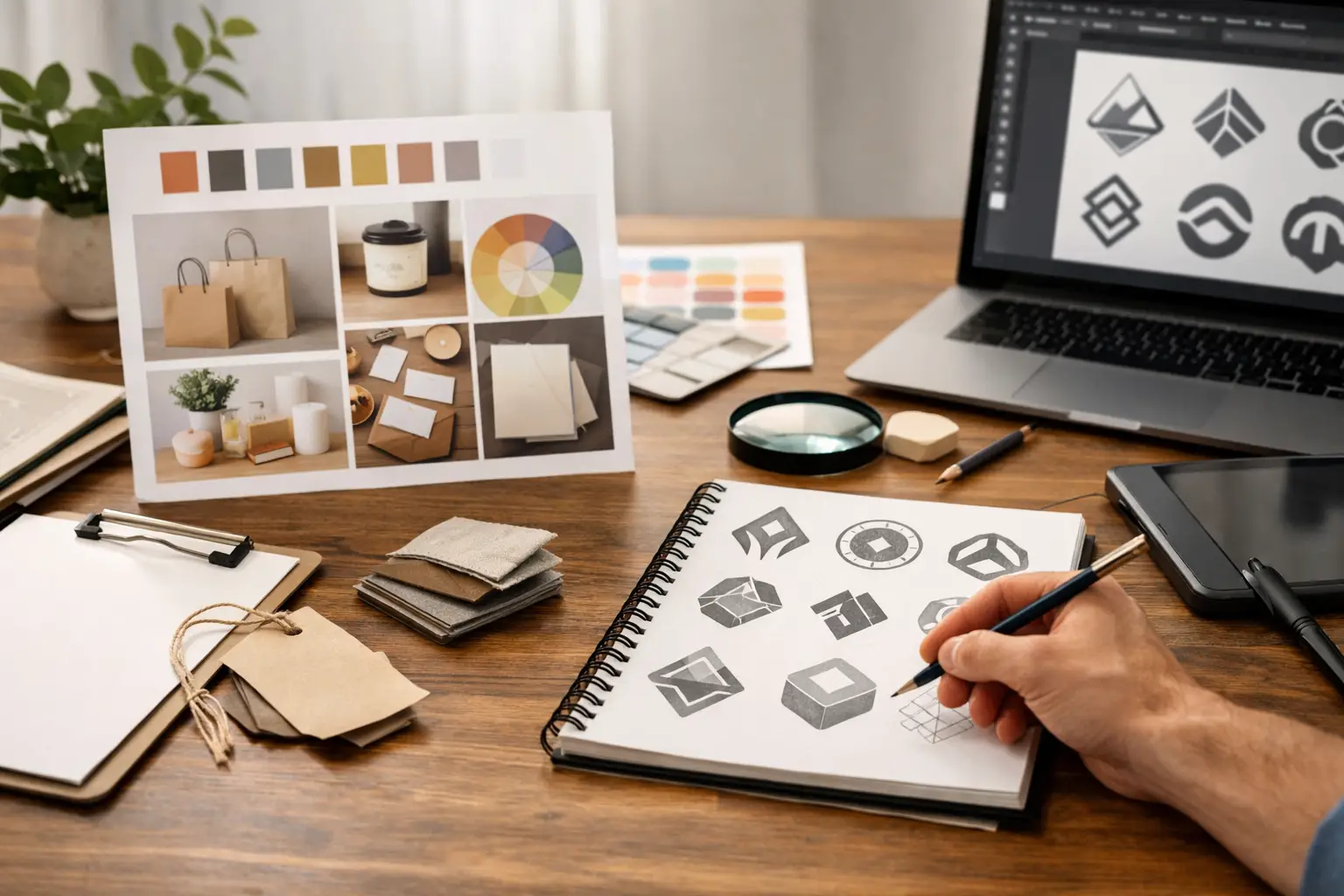
This includes visual choices like colors, typography, image style, and layout standards. It also includes verbal choices like taglines, service descriptions, calls to action, and the tone you use across every customer touchpoint. When branding is done well, your business feels coherent. Customers get the same impression whether they find you online, meet you in person, or receive a printed brochure.
For small businesses, this kind of consistency has practical value. It helps people remember you. It reduces confusion. It makes your marketing easier to produce because you are not reinventing the look and message every time you create something new.
Strong branding also saves time. If you already know your voice, audience, visual style, and market position, decisions get faster. That matters when you are juggling operations, sales, and customer service at the same time.
Why small businesses often confuse branding with logo design
The confusion is understandable. A logo is visible, concrete, and easy to ask for. Branding feels broader and sometimes harder to define. If you are a busy owner trying to fix your marketing quickly, asking for a logo can seem like the most direct path.
Sometimes that is the right first step. If your current logo is truly weak, inconsistent, or unusable, improving it can make an immediate difference. But if your business also has unclear messaging, mismatched visuals, and no real brand structure, a logo refresh by itself may only solve part of the problem.
This is especially common with businesses that have grown quickly. They may have started with a basic logo and a simple website, then added flyers, social posts, email marketing, signs, and sales materials over time. Before long, nothing quite matches. The business looks fragmented, even if the service itself is strong.
In those cases, the issue is not just design quality. It is brand alignment.
Branding vs logo design: which one should come first?
It depends on where your business is right now.
If you are just starting out, you do not always need an elaborate brand strategy document before launching. Small businesses often need to move fast. But you do need enough brand clarity to make smart design decisions. Even a simple understanding of your audience, value proposition, tone, and positioning will lead to a better logo and stronger materials.
If your business is already operating and your marketing feels scattered, branding should usually come first. Otherwise, you risk designing a new logo without fixing the larger inconsistency around it. That can lead to another redesign later, which costs more time and money.
If your business already has a clear message and strong customer direction, but the visual identity looks dated or inconsistent, logo design may be the priority. The key is to diagnose the real issue instead of assuming every problem starts with the logo.
This is where practical guidance matters. A small business does not need unnecessary complexity. It needs the right level of brand support for its stage, budget, and goals.
How to tell what your business actually needs
A few signs point to a branding issue rather than just a logo issue. If customers seem confused about what you offer, if your website and printed materials feel like they belong to different companies, or if your messaging changes every time you promote something, the gap is bigger than the logo.
On the other hand, if your brand message is fairly clear but your visuals feel outdated, generic, or inconsistent across platforms, then logo and identity work may be the more immediate need.
It also helps to look at your customer journey. What impression does someone get the first time they find your business? Does your website, social media, signage, and sales material all feel connected? Does the business look as credible as the service you provide? If not, that disconnect can hurt trust before a conversation even starts.
For many small businesses, the answer is not a massive branding project. It is a focused brand foundation paired with professional design execution. That could mean clarifying your brand message, refining your visual identity, and creating consistent assets you can actually use day to day.
Why this matters for growth, not just appearance
It is easy to treat branding as cosmetic and logo design as a creative extra. For small businesses, that mindset usually leads to missed opportunities.
Your brand affects how people judge your credibility, how easily they remember you, and how confident they feel contacting you. Your logo supports that process, but the broader brand determines whether the business feels trustworthy and relevant.
This matters when you are competing locally, entering a new market, raising prices, or trying to attract better-fit customers. A clear brand can make your marketing work harder because it gives every touchpoint more consistency and purpose. Instead of looking like a collection of disconnected efforts, your business starts showing up with a stronger, more reliable presence.
That does not mean every small business needs the same level of investment. A solo service provider and a growing multi-location company will have different needs. But both benefit from understanding the difference between branding and logo design before spending money on either.
At AKR Marketing Designs, that practical distinction matters because small businesses rarely have time or budget for guesswork. The smartest move is to build what supports growth now while creating enough consistency to support what comes next.
A logo can help people recognize your business. Branding gives them a reason to remember it, trust it, and choose it again.